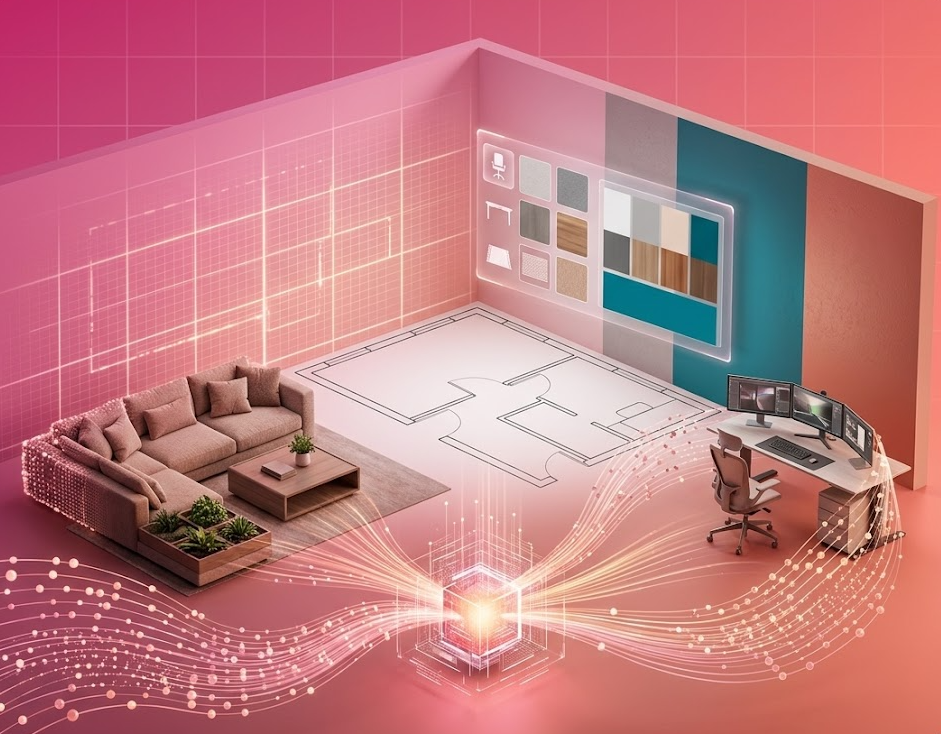
The interior design industry is undergoing a fundamental shift. For decades, designers relied on offline rendering engines that required hours — sometimes days — to produce a single photorealistic image. That era is ending.
The Problem with Traditional Rendering
Traditional render pipelines force designers into a painful cycle: set up the scene, tweak materials, wait for the render, review, adjust, and render again. Each iteration costs time and money. For studios handling multiple projects, this bottleneck directly impacts revenue and client satisfaction.
Enter Real-Time Rendering
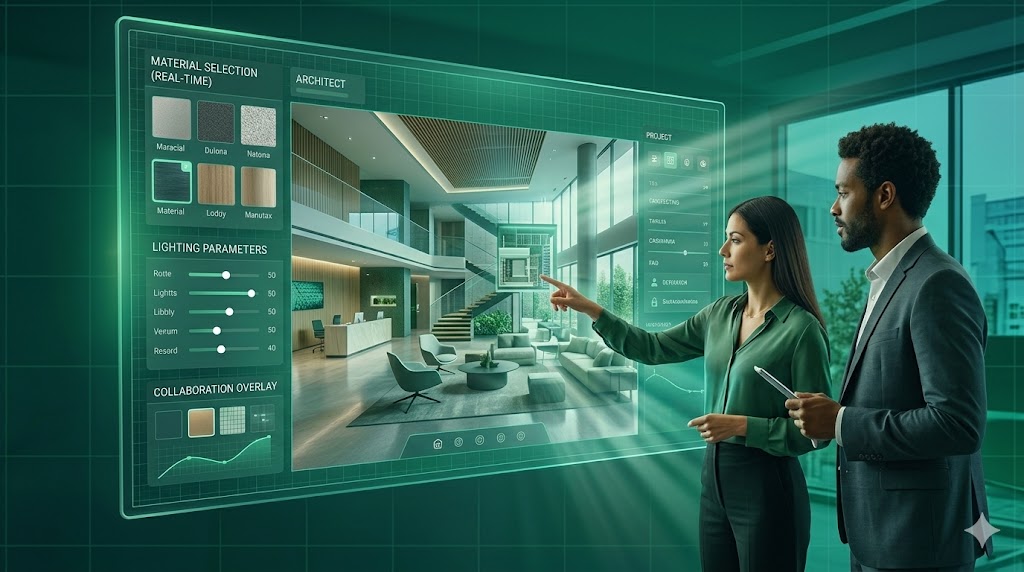
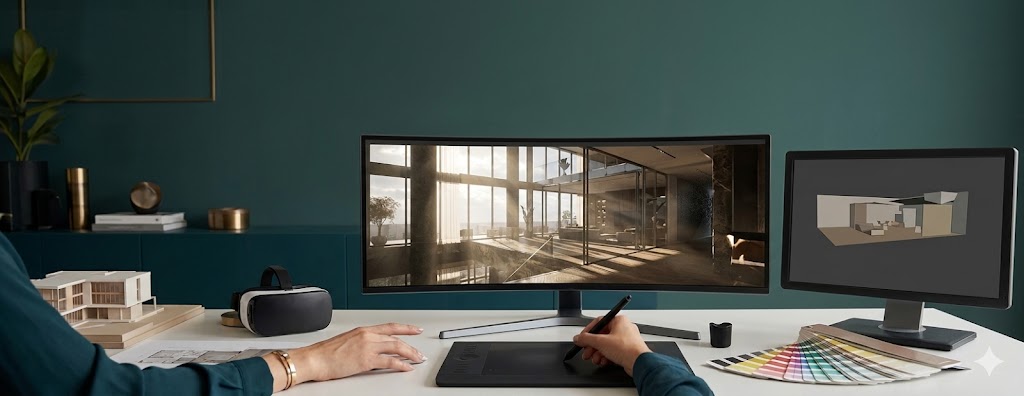
Real-time rendering, powered by game engines like Unreal Engine, changes the equation entirely. Instead of waiting for a render to complete, designers see the final result as they work. Lighting adjustments, material swaps, and furniture placement all happen in real time with photorealistic quality.
This isn't a compromise. Modern real-time engines deliver quality that matches — and in many cases surpasses — traditional offline renderers. Path tracing, global illumination, and physically-based materials are all available at interactive frame rates.
What This Means for Designers
The implications are transformative:
- Faster iteration — Test dozens of design options in the time it used to take to render one.
- Client presentations — Walk clients through spaces in real time, making changes on the fly based on feedback.
- Cost reduction — Eliminate render farm costs and reduce project timelines significantly.
- Creative freedom — Explore ideas without worrying about the cost of each render.
The Witmodel Approach
Witmodel is built from the ground up as a real-time platform. Every scene you create is rendered instantly using Unreal Engine technology. There are no render queues, no per-image costs, and no waiting. What you see is the final result.
Combined with AI-powered room planning and a cloud-based workflow, Witmodel enables a design process that would have been impossible just a few years ago.